
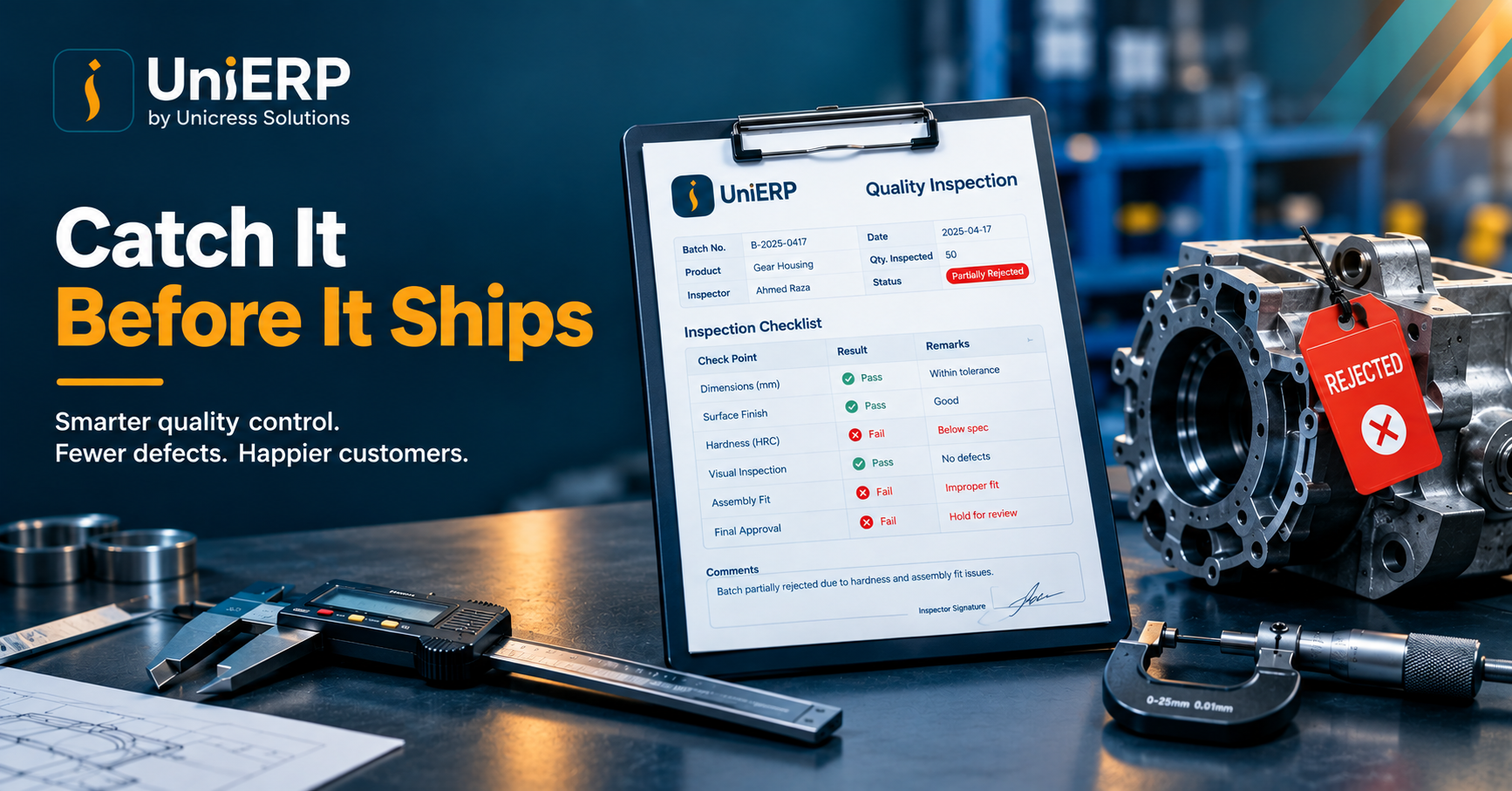
A defective part rarely announces itself. It passes through cutting, welding, and assembly looking exactly like every good part next to it and on a lot of shop floors, the first time anyone notices something’s wrong is after the batch has already shipped.
This is the core problem manufacturing quality control software is built to solve. In this post, we’ll look at why paper-based inspection breaks down, and what a connected quality control process actually looks like.
The Problem: Inspection Happens, But Visibility Doesn’t
Most factories aren’t skipping quality checks. Inspectors are filling out checklists, measuring dimensions, testing fit the work is happening. The problem is what happens to that information afterward.A paper inspection sheet with a handwritten “X” next to “Surface Finish” doesn’t alert anyone. It sits in a folder. Nobody in purchasing knows a specific raw material batch is causing recurring defects. Nobody in sales knows a shipment might need to be flagged. The rejection only becomes visible to the rest of the business when a customer complaint arrives weeks later.
Here’s what this typically looks like on the ground:
- Inspection results stay local — a rejected part is logged on paper, but nothing upstream or downstream finds out automatically.
- No pattern recognition — if the same defect keeps happening (say, a specific dimension check failing repeatedly), nobody connects the dots because each inspection sheet is a standalone piece of paper.
- Rework and scrap costs stay hidden — a “Rejected” stamp tells you a part failed, but not what that failure actually cost in wasted material and labor.
- Recalls become guesswork — if a defect is traced back to a specific batch, finding every other unit from that same batch means digging through paper logs, not running a search.
Why This Matters More Than It Seems
Quality problems that stay invisible don’t stay small. A defect rate that looks acceptable on any single day can represent a real cost when it repeats across a month of production and by the time someone notices the pattern, dozens of batches may have already shipped with the same issue.
This is exactly the gap that manufacturing quality control software closes. Instead of quality data ending its life on a clipboard, it becomes part of the same connected system that tracks production, inventory, and cost.
What Connected Quality Control Actually Looks Like
A modern quality control workflow, built into a manufacturing ERP platform, typically covers three checkpoints:
- Inbound inspection — raw materials and components are checked as they arrive, before they ever reach the production line.
- In-process inspection — quality gates are placed at key stages of production, not just at the very end.
- Outgoing inspection — a final check before a batch ships, with results tied directly to that specific batch and order.
From Rejected Stamp to Root Cause
The real difference isn’t the inspection itself inspectors were already doing that work. The difference is what happens to the result afterward. When a part fails a check inside a connected system:
- The rejection is logged against the specific batch, work order, and raw material lot not a loose sheet of paper.
- Recurring failures on the same check point become visible as a pattern, not an isolated incident.
- Purchasing can see if a specific supplier’s material is linked to repeated rejections.
- If a recall is ever needed, every unit from the affected batch can be identified in seconds, not days.
Batch Traceability Ties It Together
Quality control is only as useful as the traceability behind it. A manufacturing ERP with batch and lot tracking means every finished product carries a clear thread back to the raw materials, the work order, and the inspection results tied to it end to end.
Who Feels This Problem Most
A few signs suggest quality control is still living on paper in your factory:
- Defects are usually discovered by the customer, not by your own inspection process.
- Nobody can quickly answer “how many units from this batch have shipped so far?”
- Rework and scrap numbers are estimated, not tracked against specific causes.
- Quality data and production data live in two completely separate places.
If any of that sounds familiar, the fix usually isn’t stricter checklists it’s connecting the checklist to the rest of the system.
Final Thoughts
Catching a defect on the inspection floor is only half the job. The other half is making sure that information actually reaches the people who can act on it purchasing, production planning, and management before the next batch repeats the same mistake.
UniERP’s manufacturing module builds quality control gates directly into the production flow, so inspection results, batch traceability, and cost visibility all live in one connected system.
Ready to see what connected quality control looks like on your shop floor? Book a free demo at unierp.io and put your factory on one screen.