In the modern world of business competition, it is not possible to work hard enough, and this is all that is needed, real time visibility and smart systems are a key to sustainable growth.
Most of the companies cope with daily operations, yet in the background they are struggling with:
- Scattered business data
- Delayed reports
- Slow decision-making
- Disconnected departments
The more the business expands the more complexity and less clarity.This is a time which normally makes an ERP (Enterprise Resource Planning) system not optional at all but a necessity.
This guide will discuss five indicators that will show that your business is prepared to adopt ERP software.
1.Your Business Information is Spread across several Systems.
If your company uses:
- Disaggregate accounting software.
- Excel sheets for inventory.
- Manual files for HR.
- Another sale, or CRM tool.
then your organization does not have one source of truth.
This leads to:
- Different or redundant data.
- Frequent human errors
- No live view to the management.
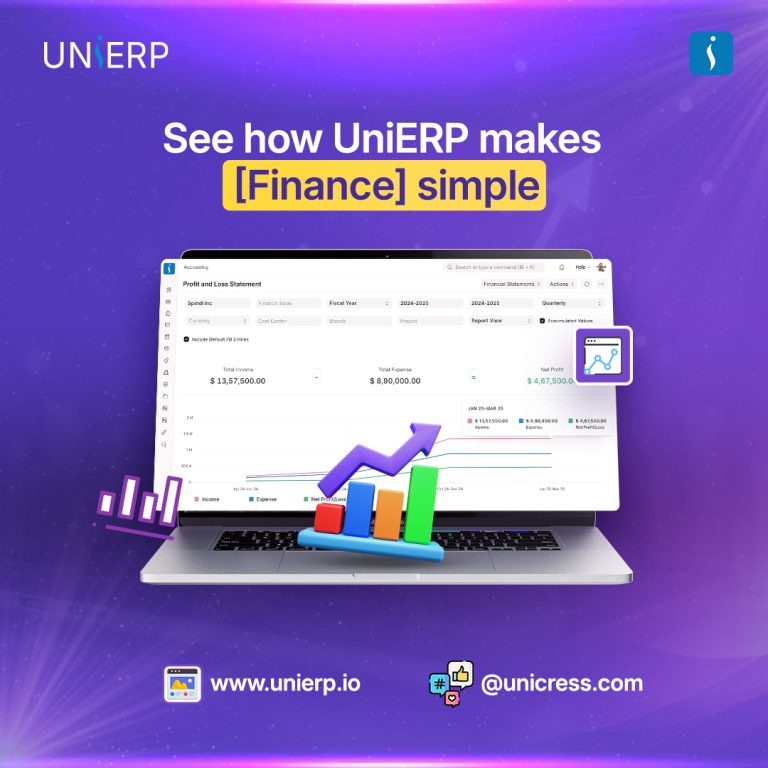
Through an ERP system, all departments are linked to a single system thereby giving out real-time business information with accuracy through a single dashboard.
2.There is Delay in reports or erroneous reports.
A large number of expanding companies spend:
- Days taken to prepare the financial reports.
- Hours spent in manual calculations
- Time adjusting incompatible figures.
As reports are prepared, it is already too late to make decisions on time.
ERP software addresses this with the following:
- Electronic financial reporting.
- Live dashboards and intelligence.
- Real-time profit and expenses and cash-flow monitoring.
This will enable leadership to make informed decisions rather than speculation.
3.Lack of co-ordination between departments.
The most frequent coordination issues are:
- Sales teams that do not know what is in stock.
- Finance that does not have the visibility of impending payments.
- HR getting productivity information too late, management that lacks the ability to visualize the performance.
These problems are normally caused by non-linked systems and paper-based communication.
After ERP implementation:
- The different departments are working under the same system.
- Exchange of information is real time.
- Processes are automated and made transparent.
The result:
- Improved teamwork
- Reduced delays
- Increased operational effectiveness.
4.Excessively, Time was Wasted on Manual Labor:
In case employees use the majority of their time on:
- Repetitive data entry
- Updating spreadsheets
- Creating invoices manually
- Calculating payroll by hand
Your company is lacking automation strength.
ERP software automates:
- Invoicing and billing
- Payroll processing
- Inventory updates
- Notifications, authorizations, and processes.
This leads to:
- Fewer human errors
- Significant time savings
- Increased productivity
You can then move your team to do more strategic and revenue-generating work rather than routine.
5.Your Business Is Expanding, but Control Is Reducing:
This is the most significant danger signal.
- As businesses grow:
- Transactions increase
- Employee count rises
- Customer volume expands
- Operations are made more complicated.
A lack of a powerful system makes growth a nightmare of operations.
An ERP system provides:
- full operational transparency.
- management through centralization.
- scaling business processes.
- infrastructure that can be expanded in the future.
In basic terminologies, ERP helps in structured and managed expansion rather than misunderstanding.
At What Point Should ERP be Implemented?
ERP should be taken into serious consideration in case:
- You are so dependent on Excel sheets.
- Reports are slack or erroneous.
- Departments lack integration.
- Too much time is wasted by manual labor.
- Development is hard to deal with.
Delay in the ERP implementation may lead to:
- Lost revenue opportunities
- Slow strategic decisions
- Operational inefficiencies
ERP can be easily scaled smoothly the sooner you implement it.
Any business that is expanding will always hit a point where manual systems cease operating satisfactorily. In case your company is suffering the five signs as discussed above,
It is clear that: ERP software is not a luxury anymore; it is also a need.
Try our free demo: demo.unierp.io
The Modern ERP solutions offer:
- Real-time insights
- Intelligent automation
- Smooth integration of departments.
- Orderly and controllable development.
Most significantly, ERP makes business reactive and not proactive. And the faster you get the right ERP system, the sooner your business is able to proceed to the next stage of efficiency, control and profitability.