Small scale tasks are efficient with spreadsheets, but when the business grows, the spreadsheets become hard to manage, have errors and are inefficient. Most organizations come to the juncture of growth that is constrained by the use of spreadsheets. Going digital with UniERP ERP as a replacement of spreadsheets is a significant move towards operational excellence and digital maturity.
The reason Spreadsheet Scalability Breaks.
The usual limitations of spreadsheets are:
- Manual data entry errors
- Version control confusion
- Lack of real-time updates
- None of the automation or integration.
- Inadequate reporting features.
- These issues slow down the growth and augment operational risk.
- Transforming the ERP Process.
These challenges slow down growth and increase operational risk.
The ERP Transformation Journey
A migration to UniERP changes business processes in phases:
1. Centralization
Every department is transferred to a single platform.
2. Automation
Excel spreadsheets and manual processes transform into automated processes.
3. Real-Time Visibility
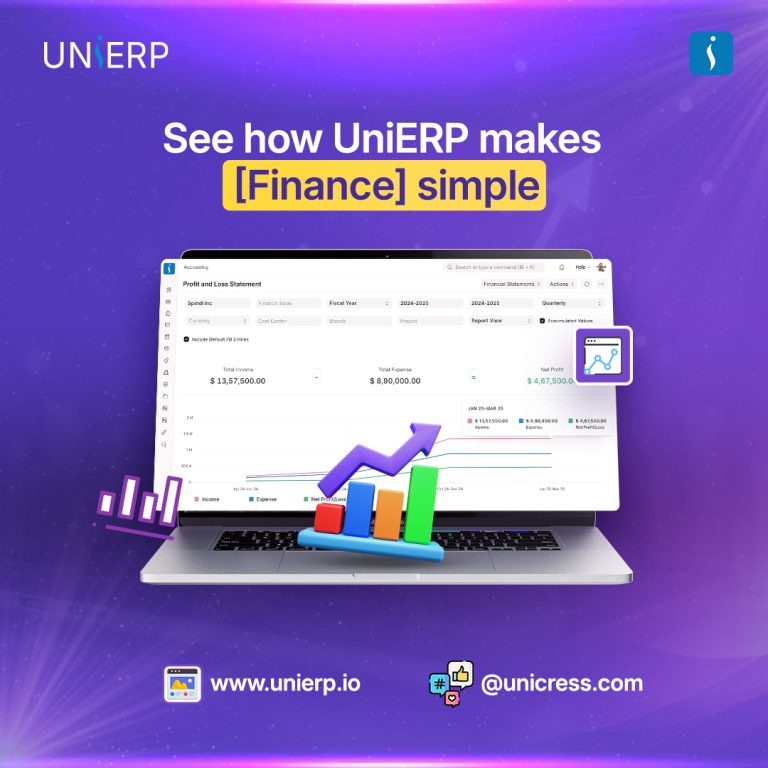
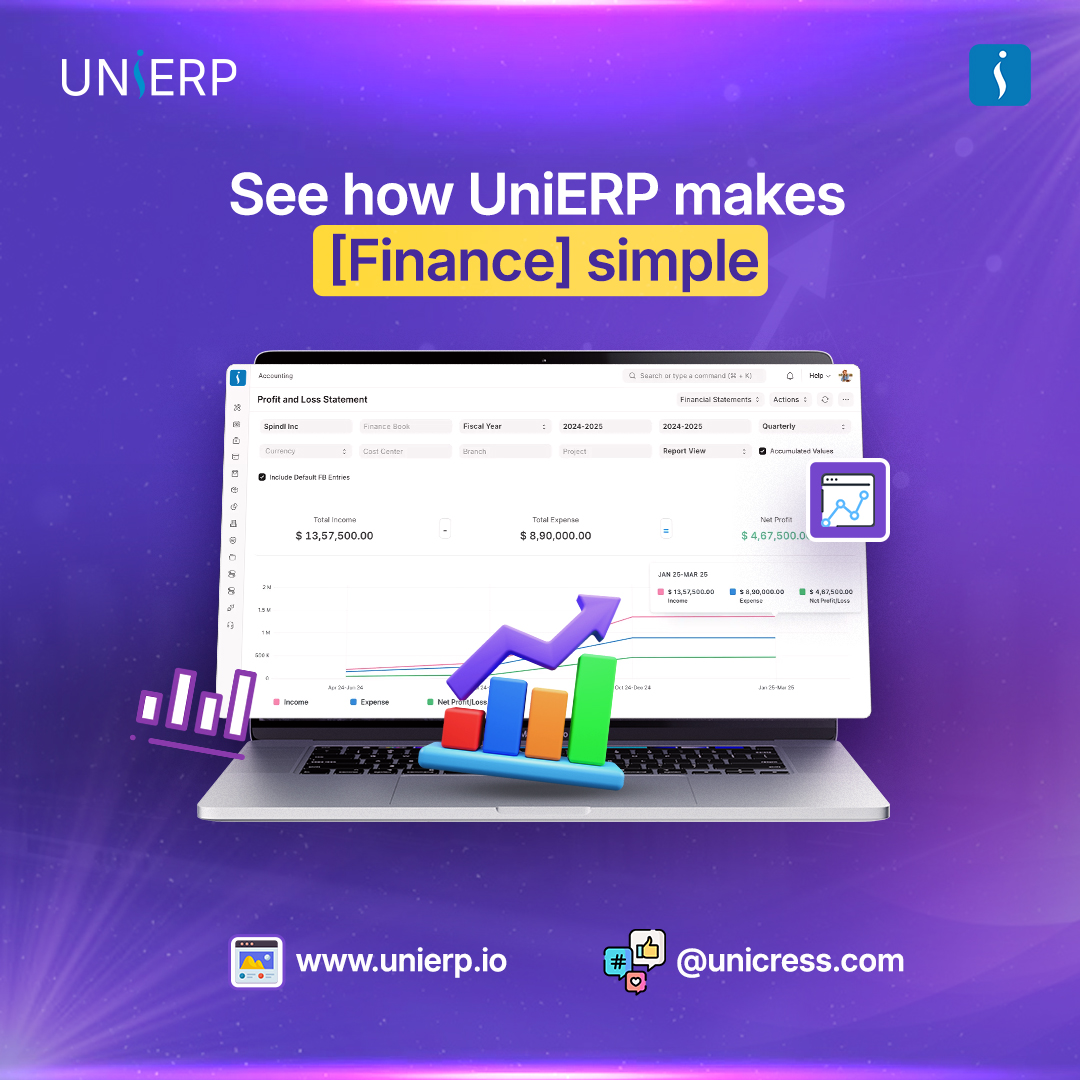
Live dashboards and analytics are obtained by the leaders, rather than delayed reports.
4. Scalable Growth
Systems facilitate growth without organizational mess.
ERP Adoption Business Impact:
Organizations that implement UniERP normally enjoy:
- Faster reporting cycles
- Reduced human error
- Improved financial and operational management.
- Improved collaboration
- Greater scalability in the long-run.
ERP forms the basis of digital transformation.
The business of moving out of spreadsheets into ERP is not merely an upgrade of technology, but a change of business. UniERP helps companies to avoid the manual complexities with smart automation, facilitating efficiency, transparency, as well as long-term growth.